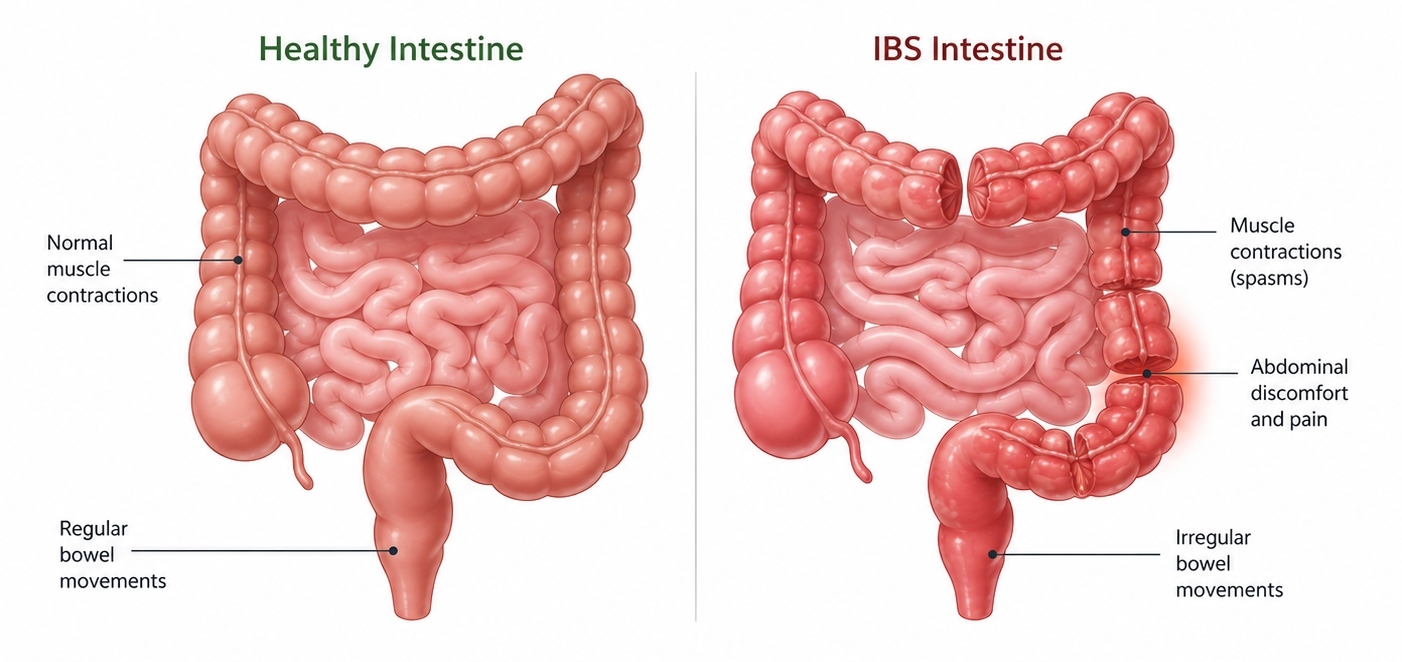
Types of irritable bowel syndrome
IBS is classified according to the predominant bowel habit, which can help guide treatment and symptom management.
- IBS with diarrhoea (IBS-D) – characterised by frequent loose or watery stools, urgency to pass motion and episodes of diarrhoea that may be accompanied by abdominal pain or cramping
- IBS with constipation (IBS-C) – characterised by infrequent bowel movements, hard stools, straining during defecation and a sensation of incomplete bowel emptying
- Mixed IBS (IBS-M) – involves alternating episodes of diarrhoea and constipation, sometimes occurring over weeks or months
- Unclassified IBS (IBS-U) – symptoms are consistent with IBS but do not fit clearly into the other recognised subtypes
What causes irritable bowel syndrome?
IBS is considered a disorder of gut-brain and gut-food interaction, where communication between the digestive tract and nervous system becomes disrupted. This altered communication can affect how the intestines move, respond to normal digestive processes and process sensations, leading to recurring abdominal pain, bloating and changes in bowel habits.
Although the exact cause of IBS is not fully understood, several factors are believed to contribute to its development, including:
- Altered gut-brain signalling – communication between the intestines and the brain becomes more sensitive, causing normal bowel activity to trigger discomfort or pain.
- Increased intestinal sensitivity – people with IBS often experience heightened sensitivity to normal stretching or movement within the intestines, resulting in abdominal pain or cramping.
- Abnormal intestinal motility – the intestines may contract too quickly or too slowly, contributing to diarrhoea, constipation or alternating bowel habits.
- Changes in the gut microbiome – alterations in the balance of intestinal bacteria may influence digestion, bowel function and symptom severity.
- Previous gastrointestinal infections – some individuals develop IBS after recovering from food poisoning, gastroenteritis or other intestinal infections, a condition known as post-infectious IBS.
- Stress and psychological factors – stress, anxiety and poor sleep may influence gut function through the gut-brain axis and trigger symptom flare-ups in susceptible individuals.
No single factor is responsible for IBS in every individual. Instead, the condition is thought to result from a combination of biological, environmental and psychological influences that affect the normal function of the digestive system.
IBS commonly causes abdominal pain, bloating and changes in bowel habits that may persist for months or years.
The symptoms vary between individuals but commonly include:
- Abdominal pain or cramping –often improves after passing stool and may fluctuate throughout the day
- Bloating and abdominal distension –many patients report excessive gas, abdominal fullness or visible bloating
- Diarrhoea –frequent loose stools, urgency or the need to rush to the toilet may occur in IBS-D
- Constipation –hard stools, infrequent bowel movements or difficulty passing stool may occur in IBS-C
- Mucus in stools –large amounts of mucus, which can be visible during passing motion
- A sensation of incomplete bowel emptying (link to incomplete bowel emptying)– some individuals continue to feel the urge to pass stool even after a bowel movement
Who is at risk of developing irritable bowel syndrome
Although IBS can affect anyone, factors associated with a higher likelihood of developing symptoms include:
- Age – IBS often develops before the age of 50 and frequently begins in adolescence or early adulthood, although symptoms can occur at any age
- Family history –genetic and environmental factors may influence susceptibility, particularly if close family members also experience functional gastrointestinal disorders.
- Gender –IBS is diagnosed more frequently in women than men, possibly due to hormonal influences and differences in gut sensitivity
- Chronic stress –work-related stress, family responsibilities and emotional strain may affect gut-brain communication and contribute to symptom flare-ups
- Anxiety and mood disorders – psychological factors can influence intestinal sensitivity, bowel function and symptom perception
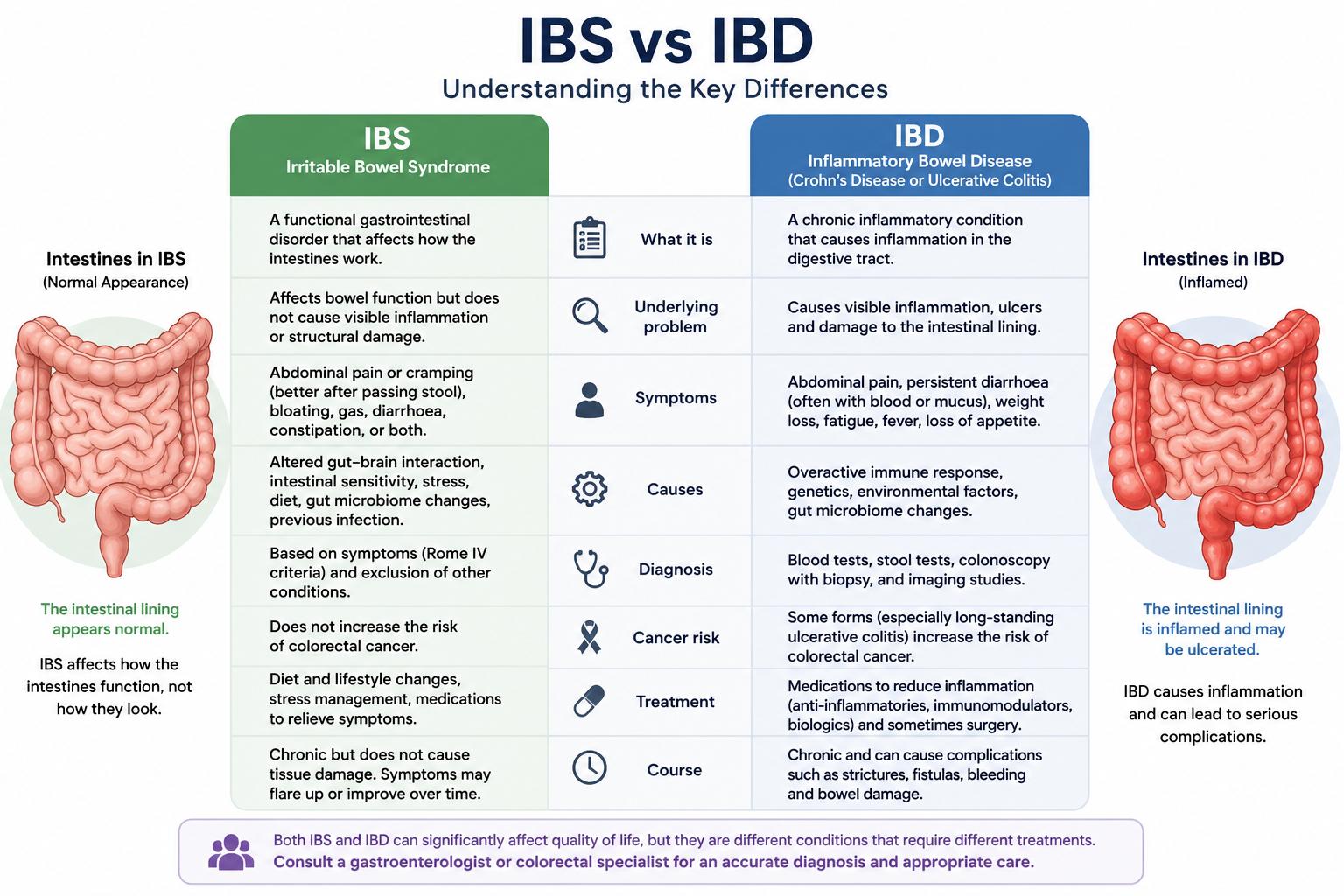
IBS and IBD may share similar symptoms but are different conditions that require different treatment approaches.
How is irritable bowel syndrome diagnosed in Singapore?
As there is no single test that can definitively confirm IBS, the diagnosis is made based on a combination of investigative processes.
One of the most widely used diagnostic frameworks is the Rome IV criteria, which help identify IBS based on characteristic symptoms. In general, IBS is considered when a person experiences recurring abdominal pain over the preceding months, together with at least two of the following:
- Symptoms that are related to bowel movements
- A change in how often bowel movements occur
- A change in the consistency or appearance of stools
Dr Aaron Poh will also consider other investigations where appropriate to exclude conditions that may mimic IBS:
- Colonoscopy– may be recommended when warning signs such as rectal bleeding, unexplained weight loss, anaemia or a family history of colorectal cancer are present.
- Gastroscopy – occasionally performed if symptoms overlap with upper digestive conditions such as gastritis, reflux disease (link to heartburn & reflux) or peptic ulcers.
- Imaging studies –computed tomography (CT) scans or other abdominal imaging may be used when an alternative abdominal condition is suspected.
- Blood and stool tests –help identify infection, inflammation, anaemia or other medical conditions that can resemble IBS
Diagnosis focuses on recognising characteristic IBS symptoms while excluding other gastrointestinal conditions that can cause similar complaints.
How is irritable bowel syndrome treated in Singapore?
Treatment for IBS is highly individualised and depends on the predominant symptoms, the severity of the condition and the specific triggers identified. In many cases, a combination of dietary, lifestyle and medical interventions is required for effective symptom control.
- Dietary modification –identifying and reducing foods that trigger symptoms may help minimise bloating, abdominal discomfort and bowel irregularity. Common triggers include fatty foods, spicy meals, caffeine and alcohol
- Low-FODMAP dietary approach –some patients benefit from reducing fermentable carbohydrates that are poorly absorbed in the intestines. This dietary strategy may help decrease gas production, bloating and diarrhoea symptoms
- Optimising fibre intake –increasing soluble fibre intake may help regulate bowel movements and improve both constipation and overall bowel function in selected patients
- Maintaining adequate hydration –drinking sufficient fluids helps support normal bowel function and is particularly important for individuals experiencing diarrhoea or constipation
- Stress management –because IBS is closely linked to gut-brain interactions, improving sleep quality, managing stress and addressing anxiety may reduce symptom frequency and severity
- Medications for diarrhoea-predominant IBS –anti-diarrhoeal medications and other symptom-targeted therapies may help reduce stool frequency, urgency and abdominal discomfort
- Medications for constipation-predominant IBS –laxatives, stool-softening agents or prescription medications may be used to improve bowel movements and relieve constipation-related symptoms
Planning your visit from the Philippines
For patients travelling from the Philippines, arrangements can often begin before arriving in Singapore.
Online consultation
A teleconsultation with Dr Aaron Poh may be arranged before travel. This allows your symptoms, medical history and previous investigations to be reviewed in advance, so that appropriate assessments can be planned before your visit.
To prepare for your consultation, it will be helpful to have:
- A summary of your symptoms and when they began
- Previous colonoscopy reports
- Blood and stool test results
- Imaging studies, if performed
- A list of current medications
- Questions you would like to discuss
Coordination and travel support
The Alpine Surgical team can assist with coordinating consultations, investigations and follow-up appointments within your intended travel period to help make your visit more efficient.
Patients from the Philippines can begin IBS evaluation and treatment planning before travelling to Singapore.
Why choose Alpine Surgical Practice for IBS assessment?
Many patients from the Philippines seek specialist evaluation after experiencing months or years of recurring bloating, abdominal discomfort, diarrhoea or constipation without a clear explanation.
At Alpine Surgical Practice, Dr Aaron Poh takes a structured approach to understanding your symptoms, reviewing previous investigations and identifying whether IBS is the most likely diagnosis or whether additional assessment is required to exclude other colorectal conditions. For patients travelling to Singapore, consultation and investigation planning can often be coordinated efficiently, helping to reduce uncertainty and provide a clearer path towards symptom control.
If recurring bowel symptoms are affecting your quality of life, arranging an appointment may help provide greater diagnostic clarity and a more personalised treatment plan.
Care focuses on identifying the cause of persistent bowel symptoms and developing a practical long-term management strategy.