A hernia occurs when tissue, such as fat or part of the intestine, pushes through a weakened area in the surrounding muscle or connective tissue. Abdominal-wall hernias commonly appear as a lump in the groin, around the navel or near a previous surgical incision.
The lump may become more noticeable when standing, coughing, lifting or straining and may reduce in size when lying down. Some hernias cause little discomfort initially, while others gradually become painful or interfere with movement and daily activities.
For patients travelling from the Philippines, a pre-travel online consultation may allow Dr Aaron Poh to review your symptoms, medical history and available imaging before you arrive in Singapore.
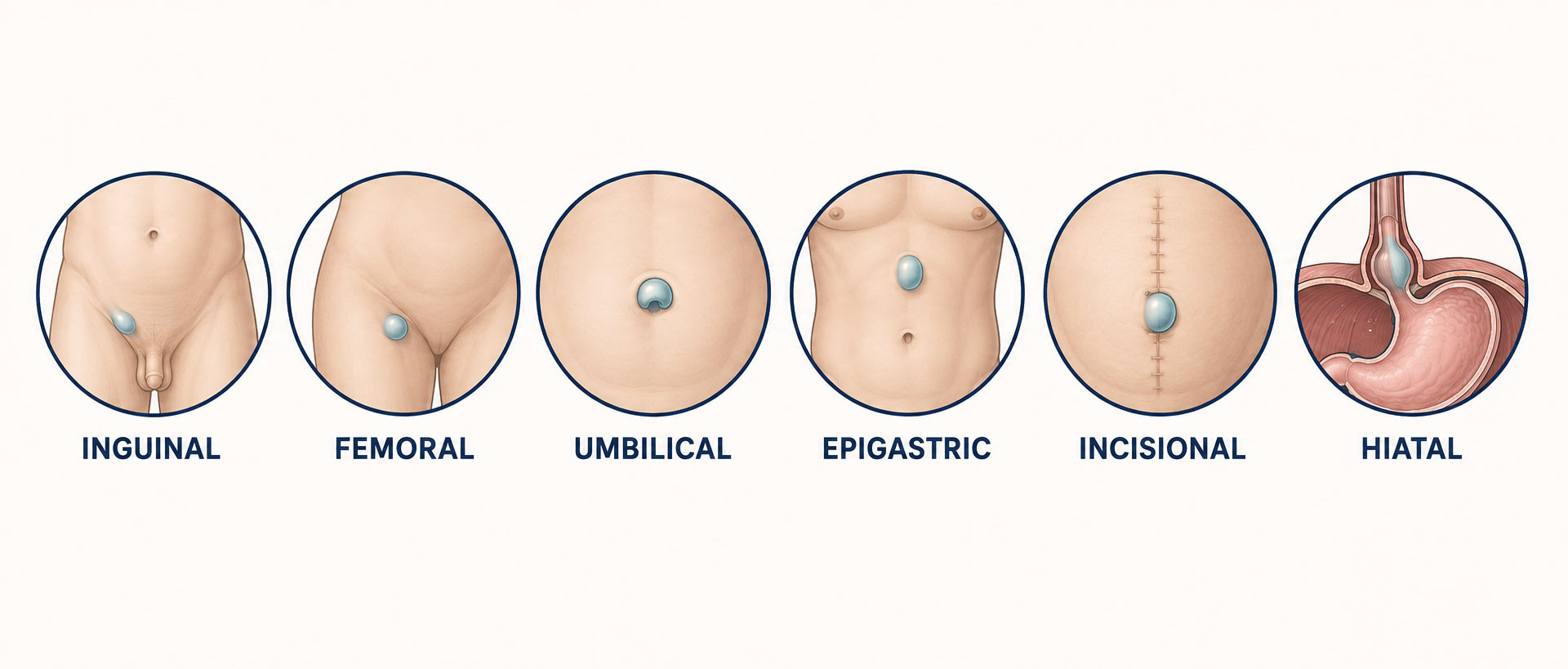
Hernias are classified according to where they develop, including the groin, abdominal wall and diaphragm.
Type of Hernia
Where it develops
Inguinal hernia
Develops in the groin and may extend into the scrotum in men. This is one of the most common types of abdominal-wall hernia.
Femoral hernia
Appears lower in the groin or at the top of the inner thigh. It is more common in women and carries a comparatively higher risk of the bowel becoming trapped.
Umbilical hernia
Forms at or near the belly button. In adults, it may be associated with increased pressure within the abdomen.
Epigastric hernia
Develops in the upper abdominal wall between the breastbone and belly button.
Incisional hernia
Forms through a weakened area at or near the site of a previous abdominal operation.
Recurrent hernia
Develops again at or near the site of a previous hernia repair.
Hiatal hernia
Occurs when part of the stomach moves through an opening in the diaphragm into the chest. It may cause heartburn, acid reflux, bloating or discomfort after eating.
Unlike abdominal-wall hernias, a hiatal hernia does not usually cause a visible external lump. Its symptoms, assessment and treatment may therefore differ from those of groin or abdominal hernias.
What causes a hernia?
A hernia can develop when pressure within the abdomen acts against a weakened area of muscle or connective tissue.
Some people are born with a naturally weaker area in the abdominal wall, while others develop weakness because of ageing, surgery, injury or repeated pressure within the abdomen.
Factors that may contribute to hernia formation include:
Age-related weakening of muscle and connective tissue
A previous abdominal operation
A persistent cough
Repeated straining caused by constipation
Pregnancy or multiple pregnancies
Excess body weight
Fluid accumulation within the abdomen
Regular heavy lifting or physically demanding work
Smoking, which may affect tissue quality and wound healing
A family or personal history of hernia
Heavy lifting does not necessarily cause a hernia by itself. However, the increased abdominal pressure associated with lifting may make an existing weakness or previously unnoticed hernia more apparent.
In many patients, there is no single identifiable cause.
What are the symptoms of a hernia?
Symptoms vary depending on the type, size and location of the hernia. Common symptoms include:
A visible or palpable lump in the groin or abdomen
A lump that becomes more noticeable when coughing, standing, lifting or straining
Aching, pressure or a dragging sensation around the affected area
Pain during exercise, bending or physical work
A burning or pulling sensation near a previous surgical scar
Swelling around the navel
A lump that becomes smaller or disappears when lying down
Some hernias remain painless, particularly when they are small. However, the absence of pain does not confirm whether a hernia is uncomplicated. A medical assessment can help determine the type of hernia and whether treatment should be considered.
When does a hernia require urgent medical attention?
A hernia can occasionally become trapped or affect the blood supply to part of the intestine. Seek urgent medical attention if you experience:
Sudden or rapidly worsening pain around the hernia
A lump that becomes firm, very tender or cannot be pushed back in
Nausea or vomiting
Increasing abdominal swelling
An inability to pass stool or gas
Red, purple or darkened skin over the lump
Fever or feeling acutely unwell
These symptoms may indicate bowel obstruction or strangulation and require emergency assessment.
Patients in the Philippines who develop these symptoms should seek care at the nearest emergency department rather than waiting to travel to Singapore.
What are the possible complications of a hernia?
Many hernias do not cause immediate complications. However, possible problems include:
Incarceration – tissue becomes trapped within the hernia and cannot return to the abdominal cavity.
Strangulation – the blood supply to trapped tissue is reduced or cut off. This is a medical emergency.
Bowel obstruction – part of the intestine becomes trapped, preventing the normal movement of intestinal contents.
Progressive enlargement – the hernia may increase in size and become more noticeable or uncomfortable.
Pain and activity limitation – symptoms may begin to interfere with exercise, lifting, work or everyday movement.
Skin changes – a large hernia may stretch or irritate the overlying skin.
The likelihood of complications varies according to the type of hernia. For example, femoral hernias generally require timely surgical assessment because they have a higher risk of trapping the bowel.
How is a hernia diagnosed in Singapore?
A hernia is often diagnosed through physical examination, with imaging arranged when additional information is required.
Diagnosis usually begins with a consultation and physical examination. Dr Aaron Poh may ask about:
When the lump or discomfort first appeared
Whether the lump changes when standing, coughing or lying down
Activities that worsen the discomfort
Previous abdominal operations
Changes in bowel habits
Existing medical conditions and medications
Whether the lump can be gently reduced
During the examination, you may be asked to stand, cough or strain so the hernia becomes easier to assess.
Imaging investigations
Imaging is not required for every patient. It may be arranged when the diagnosis is uncertain, the hernia is difficult to feel or additional information is needed for treatment planning.
Possible investigations include:
Ultrasound – may help identify a groin or abdominal-wall hernia and assess the tissue within it.
Computed tomography scan – provides more detailed information about the abdominal wall and may be considered for large, recurrent, incisional or otherwise complex hernias.
Magnetic resonance imaging – may occasionally be used when symptoms persist but findings from examination or other imaging remain unclear.
The investigation recommended will depend on the location of the suspected hernia and your clinical findings.
How is a hernia treated in Singapore?
Treatment depends on:
The type and location of the hernia
Its size and whether it is enlarging
The symptoms it causes
Whether the hernia can be reduced
The risk of bowel obstruction or strangulation
Previous hernia repairs
Your age, general health and surgical risk
The effect of the hernia on work and daily activities
Surgery is the only way to physically repair an abdominal-wall defect. However, not every hernia requires immediate surgery.
Monitoring in selected cases
Monitoring may be considered for selected patients with a hernia that causes few or no symptoms. This approach is most commonly discussed for men with minimally symptomatic inguinal hernias.
Monitoring may not be appropriate for every type of hernia. Femoral hernias, symptomatic hernias and hernias that are difficult to reduce generally require more prompt surgical assessment.
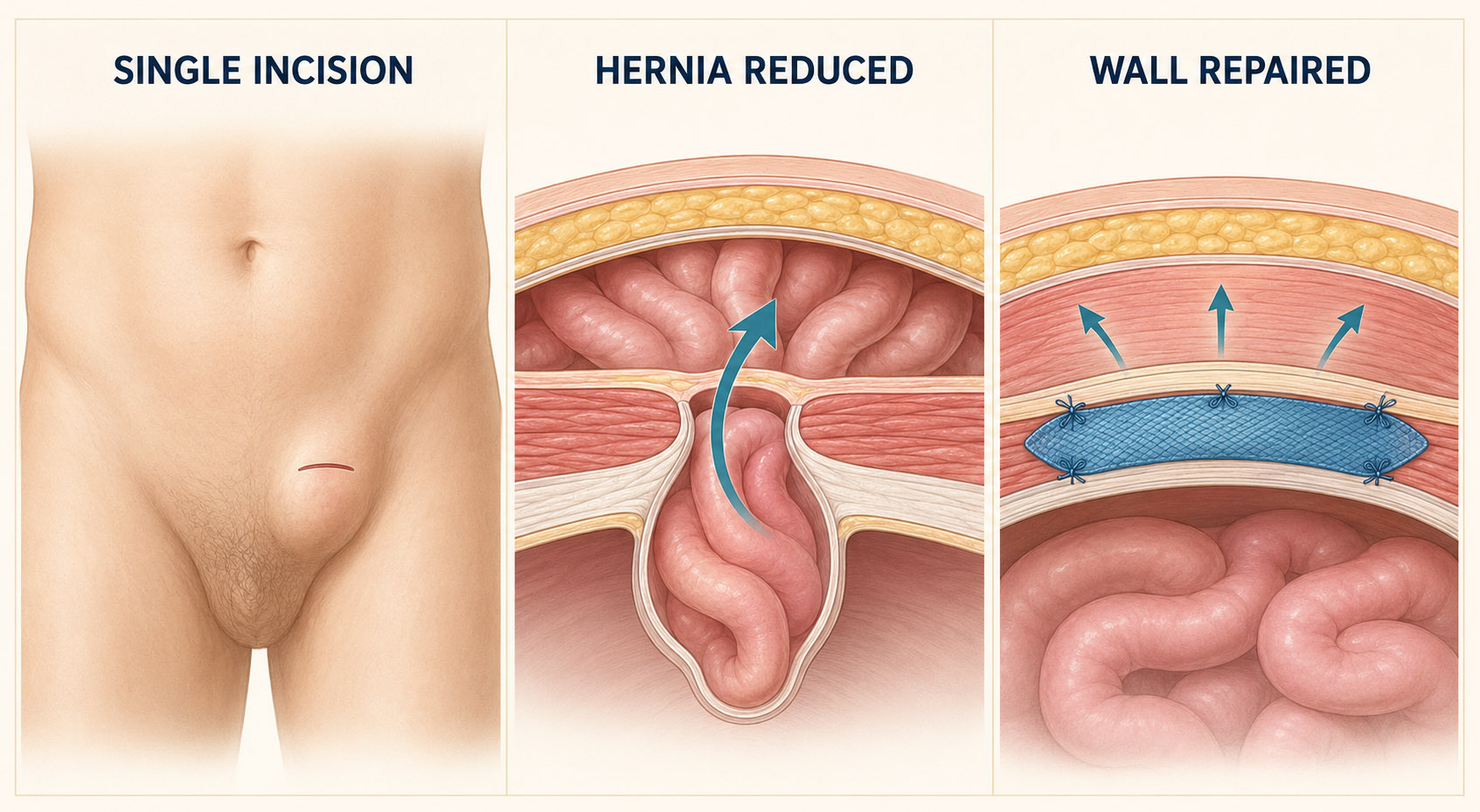
Open hernia repair
Open hernia repair involves a direct incision over the hernia.
This procedure involves a small incision directly over the hernia site. The protruding tissue is returned to its proper position and the weakened abdominal wall is reinforced, often with a surgical mesh to reduce the risk of recurrence.
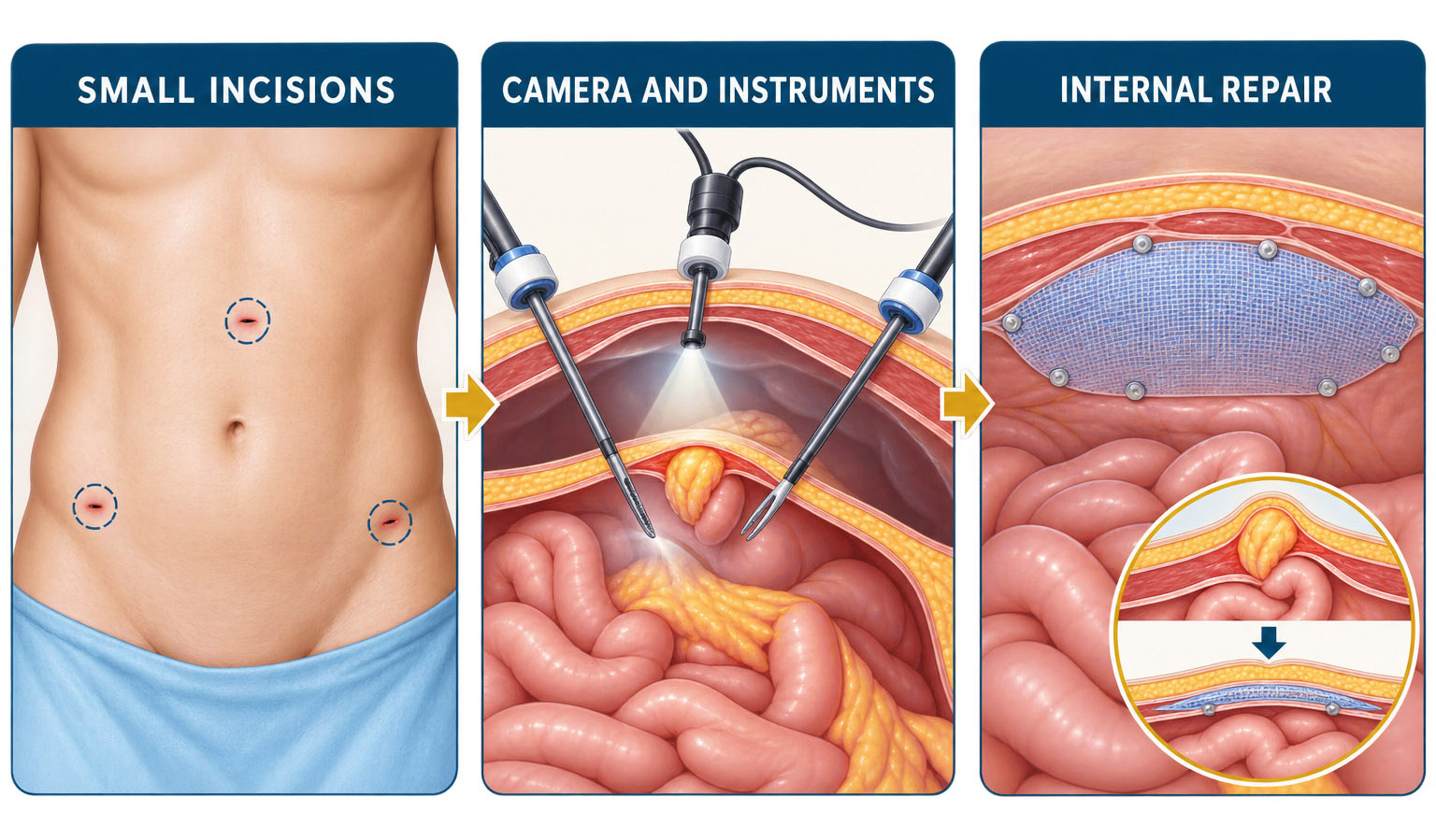
Laparoscopic (keyhole) hernia repair
Laparoscopic hernia repair through keyhole-sized incisions.
Laparoscopic hernia repair is performed through several small incisions using a camera and specialised instruments. The weakened area is usually reinforced with surgical mesh.
This approach may be associated with smaller incisions and a shorter early recovery for some patients.
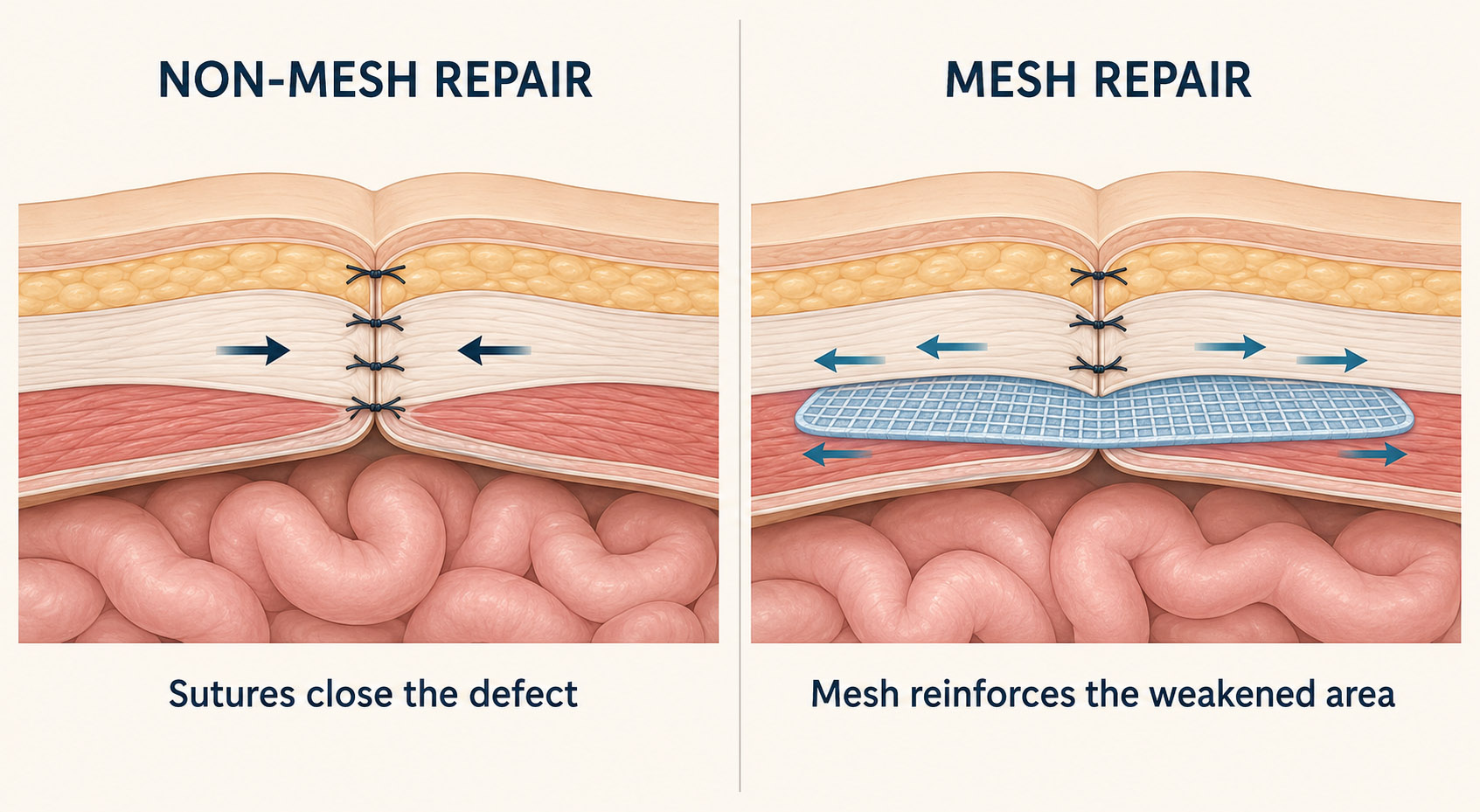
Mesh and non-mesh repair
Non-mesh repair closes the hernia defect with sutures, while mesh repair adds reinforcement across the weakened area of the abdominal wall.
Surgical mesh is commonly used in adult hernia repair to reinforce the weakened area and reduce tension on the surrounding tissue.
Mesh repair may reduce the likelihood of recurrence for many adult groin and abdominal-wall hernias. However, whether mesh is used depends on the type and size of the hernia, previous surgery, tissue quality, the presence of infection or contamination and the patient’s individual circumstances.
A non-mesh repair closes the defect using stitches. It may be appropriate for selected small hernias or when mesh use is not advised.
Dr Aaron Poh will discuss the proposed technique, including its potential benefits, limitations and risks, before surgery.
Planning your visit from the Philippines
Patients from the Philippines can begin hernia assessment and surgical planning before travelling to Singapore through an online consultation.
For patients travelling from the Philippines, evaluation and treatment planning can begin before arriving in Singapore. An online consultation with Dr Aaron Poh allows your symptoms, imaging results and medical history to be reviewed in advance. This initial review may help identify whether an in-person examination, further imaging or surgical assessment should be arranged during your visit.
To prepare, you may bring:
Symptom history and duration
Previous ultrasound or computed tomography (CT) scans
Medical and surgical history
Current medications
Questions for consultation
Our team can assist in coordinating appointments and investigations within your planned travel schedule to make your visit more efficient.
When can you travel after hernia surgery?
The appropriate time to fly depends on:
The type and complexity of the operation
Whether the surgery was open or minimally invasive
Your mobility and pain levels
The length of the flight
Your risk of blood clots
Whether postoperative review is required
Whether any complications have developed
Patients should not arrange their return flight based on a general recovery estimate alone. Dr Aaron Poh and the Alpine Surgical Practice team can advise how long you may need to remain in Singapore after the procedure.
Medical clearance does not guarantee that an airline will permit travel. Check the airline’s requirements and your travel insurance conditions before booking or changing flights.
Your care experience at Alpine Surgical Practice
Patients from the Philippines often seek specialist care when a hernia begins to enlarge, cause discomfort or affect daily activities such as work or travel.
At Alpine Surgical Practice, Dr Aaron Poh provides a structured assessment to confirm the diagnosis, evaluate severity and determine whether surgical repair is required. When necessary, further imaging may be arranged to guide treatment planning. Early evaluation can identify features that may require closer monitoring or more timely treatment, including signs associated with incarceration or strangulation.
If you have a persistent abdominal or groin lump or suspect a hernia, arranging a consultation can help clarify your condition and guide appropriate next steps.
Frequently Asked Questions (FAQs)
Everything you need to know about your medical journey
A hernia often appears as a lump in the groin or abdomen that becomes more noticeable when standing, coughing, lifting or straining. The lump may become smaller when you lie down. However, not every lump is a hernia, so a clinical examination may be required to confirm the cause.
An abdominal-wall hernia in an adult does not usually close on its own. Surgery is the only way to repair the physical defect, although monitoring may be appropriate for selected patients with few or no symptoms.
Not necessarily. The need for surgery depends on the type of hernia, the symptoms it causes, whether it is enlarging, the risk of complications and your overall health. Femoral hernias and hernias causing increasing pain or other concerning symptoms generally require more timely surgical assessment.
An abdominal-wall hernia occurs when tissue pushes through a weakened area in the abdominal wall and may form a visible lump. A hiatal hernia develops internally when part of the stomach moves through the diaphragm into the chest. It commonly causes reflux-related symptoms rather than an external swelling.
Seek urgent medical attention if the hernia becomes suddenly painful, firm, tender or cannot be pushed back in. Vomiting, increasing abdominal swelling, an inability to pass stool or gas, fever or skin discolouration over the lump may indicate bowel obstruction or strangulation.
Some patients can remain physically active while awaiting assessment, but movements that increase pressure within the abdomen may worsen discomfort or make the lump more noticeable. Check in with your doctor on which activities are appropriate based on the type of hernia and the symptoms you are experiencing.
Open repair is performed through an incision near the hernia. Laparoscopic repair uses several smaller incisions and a camera to repair the weakened area from within. The appropriate approach depends on the hernia’s type, size and location, previous surgery and your general health.
No. Mesh is commonly used in adult hernia repair to reinforce the weakened area, but it may not be suitable or necessary in every case. The decision depends on the type and size of the hernia, tissue quality, previous operations and whether infection or contamination is present.
Yes. Recurrence is possible after both mesh and non-mesh repair. The likelihood depends on factors such as the type and size of the hernia, the repair performed, tissue quality, healing and conditions that increase pressure within the abdomen.
Recovery differs between patients and procedures. It depends on the type and size of the hernia, whether open or minimally invasive surgery was performed, your overall health and whether your work involves physical activity. Dr Aaron Poh can provide a more individualised estimate after the planned repair has been determined.
Yes. A pre-travel teleconsultation allows Dr Aaron Poh to conduct an initial review of your symptoms, medical history and available imaging. The Alpine Surgical Practice team can also advise which medical documents and scan files to prepare if an in-person assessment in Singapore is arranged.
The appropriate timing depends on the operation, your recovery, mobility, pain levels, flight duration, blood-clot risk and need for postoperative review. Obtain medical advice before confirming your return flight and check any requirements imposed by your airline or travel insurer.
Dr Aaron Poh is a fully accredited General Surgeon with dual subspecialties in Colorectal Surgery and Trauma Surgery, recognised by Singapore’s Specialist Accreditation Board and Ministry of Health. He is the Medical Director of Alpine Surgical Practice, with clinics located at Mount Elizabeth Hospital, Parkway East Hospital, and Farrer Park Hospitals.
Dr Aaron Poh has extensive experience, having performed over 5,000 endoscopic procedures. He is a strong advocate for early detection through colonoscopy, particularly for individuals at risk of colorectal cancer. His expertise includes advanced endoscopic techniques such as Endoscopic Mucosal Resection (EMR) for complex polyps and colonic stenting for obstructed cancers, which help patients avoid major emergency surgery.
When surgery is required, he specialises in minimally invasive laparoscopic colorectal cancer surgery, offering patients faster recovery with less pain and scarring. In addition to cancer care, he manages a wide range of anal conditions including haemorrhoids, fistulas, fissures, and abscesses, providing comprehensive colorectal treatment.