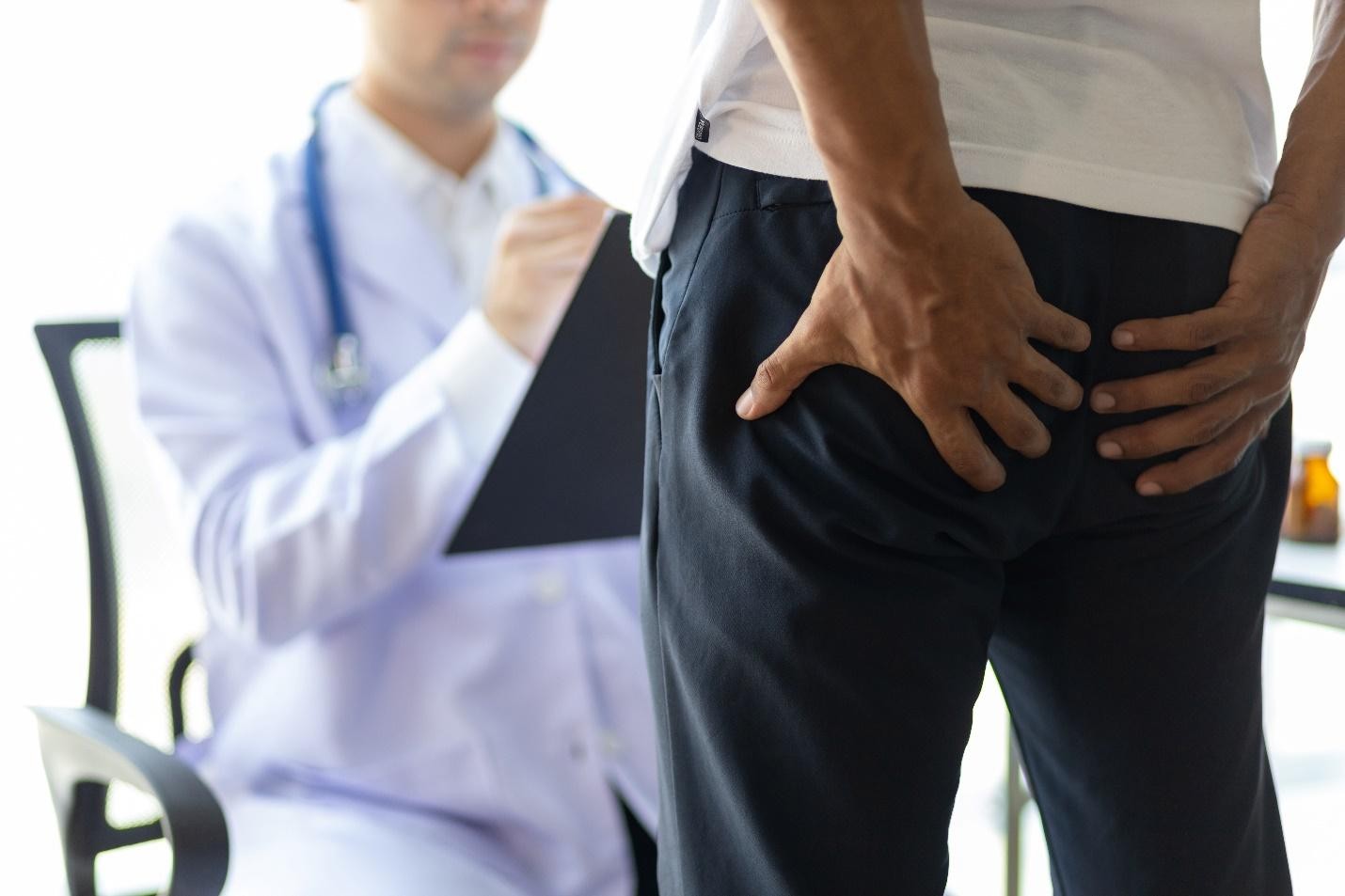
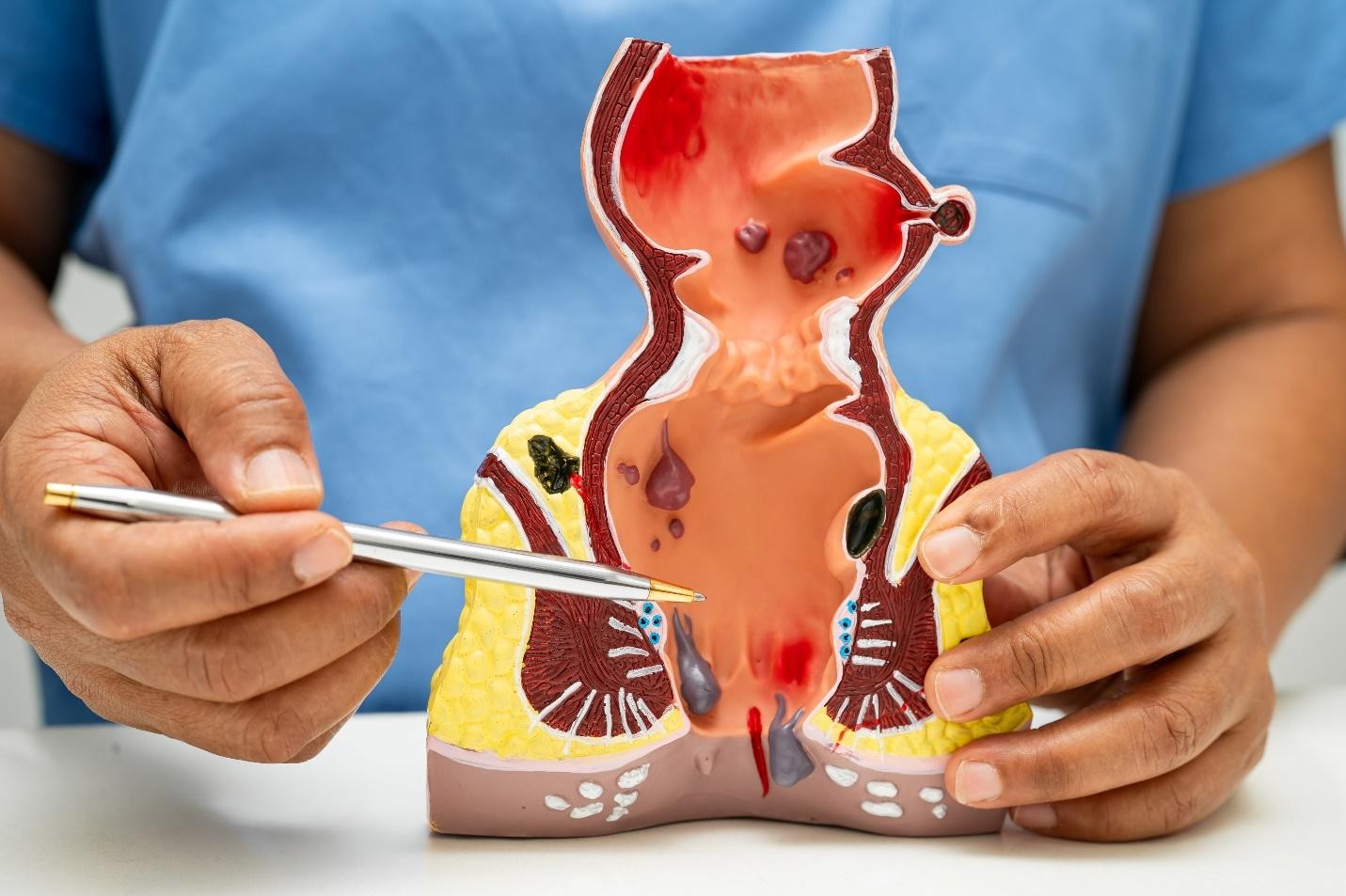
Common symptoms include:
- Bright red blood on toilet paper, in the toilet bowl or on the surface of the stool
- Anal itching or irritation
- Discomfort around the anus
- Swelling or a lump near the anal opening
- Mucus discharge
- Tissue protruding during bowel movements
- Difficulty cleaning the anal area after passing stool
- A sensation of incomplete evacuation
Internal haemorrhoids that have not prolapsed are often painless. Sudden, pronounced pain is more commonly associated with a thrombosed external haemorrhoid, an anal fissure or another anorectal condition.
Because these symptoms are not exclusive to haemorrhoids, an examination may be required to confirm their cause.
Haemorrhoids vs colorectal cancer: Why rectal bleeding should not be ignored
While haemorrhoids are a common cause of rectal bleeding, similar symptoms may also occur in colorectal cancer and other bowel conditions.
Many patients assume that rectal bleeding is automatically caused by haemorrhoids, particularly if they have experienced constipation or previously been told they have piles.
However, rectal bleeding is a symptom rather than a diagnosis.
While haemorrhoids are among the most common causes of bright red bleeding during bowel movements, similar symptoms may also occur in conditions such as:
This is particularly relevant because colorectal cancer is among the most commonly diagnosed cancers in the Philippines and across Southeast Asia. Early-stage colorectal cancer may produce symptoms that are easily mistaken for haemorrhoids, including intermittent rectal bleeding, changes in bowel habits or a sensation of incomplete bowel emptying.
Features that may warrant further evaluation include:
- Bleeding that occurs repeatedly
- Changes in bowel habits
- Unexplained weight loss
- Persistent abdominal discomfort
- Iron deficiency anaemia
- A family history of colorectal cancer
Because symptoms can overlap, persistent rectal bleeding should not be automatically attributed to haemorrhoids without appropriate assessment.
How are haemorrhoids diagnosed in Singapore?
Diagnosis begins with a review of your symptoms and bowel habits. Dr Aaron Poh may ask about:
- The colour, amount and frequency of any bleeding
- Whether bleeding occurs during bowel movements
- Pain, itching, mucus or swelling
- Whether tissue protrudes from the anus
- How long the symptoms have been present
- Constipation, diarrhoea and straining
- Previous treatments and whether they helped
- Current medications, including blood-thinning medicines
- Your personal and family colorectal history
The assessment may include:
External examination
The skin around the anus is examined for external haemorrhoids, thrombosis, prolapse, skin tags, fissures and other visible changes.
Digital rectal examination
A gloved, lubricated finger is gently inserted into the rectum to assess for tenderness, masses and other abnormalities that may not be visible externally.
Proctoscopy or anoscopy
A short instrument may be used to inspect the anal canal and lower rectum. This allows internal haemorrhoids to be identified and their degree of prolapse assessed.
Colonoscopy in selected patients
A colonoscopy is not required for every patient with haemorrhoids. It may be recommended when:
- The source of rectal bleeding is uncertain
- Bleeding persists or has atypical features
- There has been a change in bowel habits
- Anaemia or other concerning symptoms are present
- Colorectal screening is due
- There is a personal or family history that increases colorectal cancer risk
The investigations recommended will depend on your symptoms, examination findings, age and risk factors.
How are haemorrhoids treated in Singapore?
Treatment may range from dietary modification and clinic-based procedures to surgery for larger or more advanced haemorrhoids.
Treatment depends on:
- Whether the haemorrhoids are internal, external or thrombosed
- The degree of prolapse
- The severity and duration of symptoms
- The amount and frequency of bleeding
- The effect on daily activities
- Previous treatments
- Other colorectal findings
- Your overall health and preferences
Many patients begin with dietary and bowel-habit changes. Clinic-based procedures or surgery may be considered when symptoms persist, prolapse is more pronounced or conservative treatment has not provided sufficient relief.
Dietary and bowel-habit changes
Initial management may include:
- Increasing dietary fibre gradually
- Drinking sufficient fluids
- Using a fibre supplement or stool softener when advised
- Avoiding prolonged straining
- Going to the toilet when the urge arises
- Limiting unnecessary time spent sitting on the toilet
- Remaining physically active
- Managing persistent constipation or diarrhoea
These measures aim to produce softer, more regular stools and reduce pressure on the haemorrhoidal tissue.
Symptom-relief measures
Warm sitz baths may help relieve temporary discomfort or irritation. Topical creams, ointments and suppositories may also provide short-term symptom relief.
These products do not correct prolapse or remove the haemorrhoids. Prolonged use should be discussed with a doctor, particularly when symptoms continue or rectal bleeding is present.
Rubber band ligation
Rubber band ligation may be considered for selected internal haemorrhoids. A small elastic band is placed around the base of the haemorrhoidal tissue, reducing its blood supply. The treated tissue then shrinks and separates over time.
Banding is generally performed as a clinic-based procedure and does not involve surgical removal of the haemorrhoid. Some patients may require more than one treatment session.
Temporary pressure, discomfort or light bleeding can occur after the procedure. The expected recovery and symptoms requiring medical attention will be discussed beforehand.
Sclerotherapy
Sclerotherapy involves injecting a solution into the haemorrhoidal tissue to promote shrinkage. It may be considered for selected internal haemorrhoids, depending on their size, symptoms and the patient’s circumstances.
Infrared coagulation
Infrared coagulation applies controlled energy to the haemorrhoidal tissue to reduce its blood supply. It may be used for selected internal haemorrhoids.
The suitability of rubber band ligation, sclerotherapy or infrared coagulation depends on the type and severity of the haemorrhoids.
Haemorrhoidectomy
A haemorrhoidectomy surgically removes haemorrhoidal tissue. It may be considered for:
- Large external haemorrhoids
- Combined internal and external haemorrhoids
- Grade III or IV prolapsing haemorrhoids
- Persistent symptoms despite other treatments
- Selected patients with recurrent or extensive disease
Haemorrhoidectomy may have a longer and more uncomfortable recovery than clinic-based procedures, but it may be appropriate when less invasive treatments are unlikely to address the extent of disease.
Stapled haemorrhoidopexy
Stapled haemorrhoidopexy repositions prolapsing internal haemorrhoidal tissue within the anal canal and reduces its blood supply.
It is not suitable for every patient, particularly when substantial external haemorrhoidal disease is present. The potential benefits, limitations and risk of recurrence should be considered when comparing it with other surgical approaches.
Haemorrhoidal artery ligation
Haemorrhoidal artery ligation uses sutures to reduce blood flow to the haemorrhoidal tissue. In some procedures, prolapsing tissue may also be lifted and secured within the anal canal.
Whether this technique is appropriate depends on the haemorrhoid grade, degree of prolapse and individual clinical findings.
Planning your visit from the Philippines
A teleconsultation may help patients prepare for an in-person haemorrhoid assessment in Singapore.
Patients considering travelling from the Philippines may begin with a teleconsultation with Dr Aaron Poh. During this initial review, Dr Aaron Poh may discuss your symptoms, previous treatment, medical history and available investigation results before you decide whether to travel.
The Alpine Surgical Practice team can also advise which medical records to prepare, such as previous colonoscopy reports, procedure records and medication details. A physical examination may still be required in Singapore before the diagnosis, haemorrhoid grade and treatment recommendation can be confirmed.
Where practicable, consultations, investigations and treatment planning may be coordinated around your intended travel period. The duration of your stay will depend on the assessment findings and whether a procedure is recommended.
Refer to the medical document guide for further guidance.
Haemorrhoid assessment in Singapore
Assessment focuses on confirming the cause of symptoms and determining which treatment options may be appropriate.
At Alpine Surgical Practice, Dr Aaron Poh assesses whether symptoms such as rectal bleeding, discomfort or prolapse are caused by haemorrhoids or another colorectal condition.
The consultation considers your symptoms, bowel habits, previous treatments and examination findings. Depending on the diagnosis and severity of the condition, treatment may involve dietary and bowel-habit changes, clinic-based procedures or surgery.
If your symptoms persist despite self-treatment or continue to affect your daily activities, arrange a consultation for further assessment.