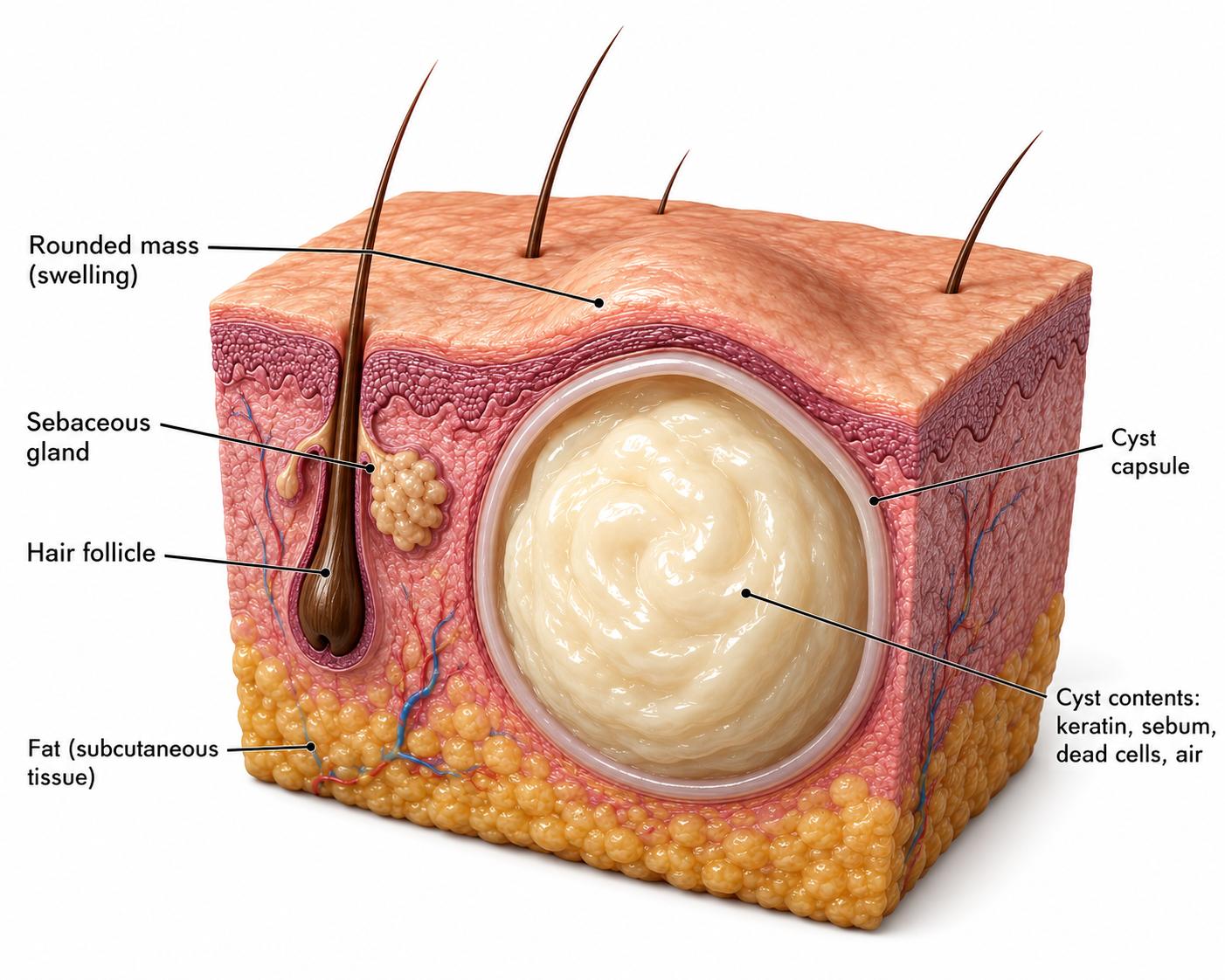
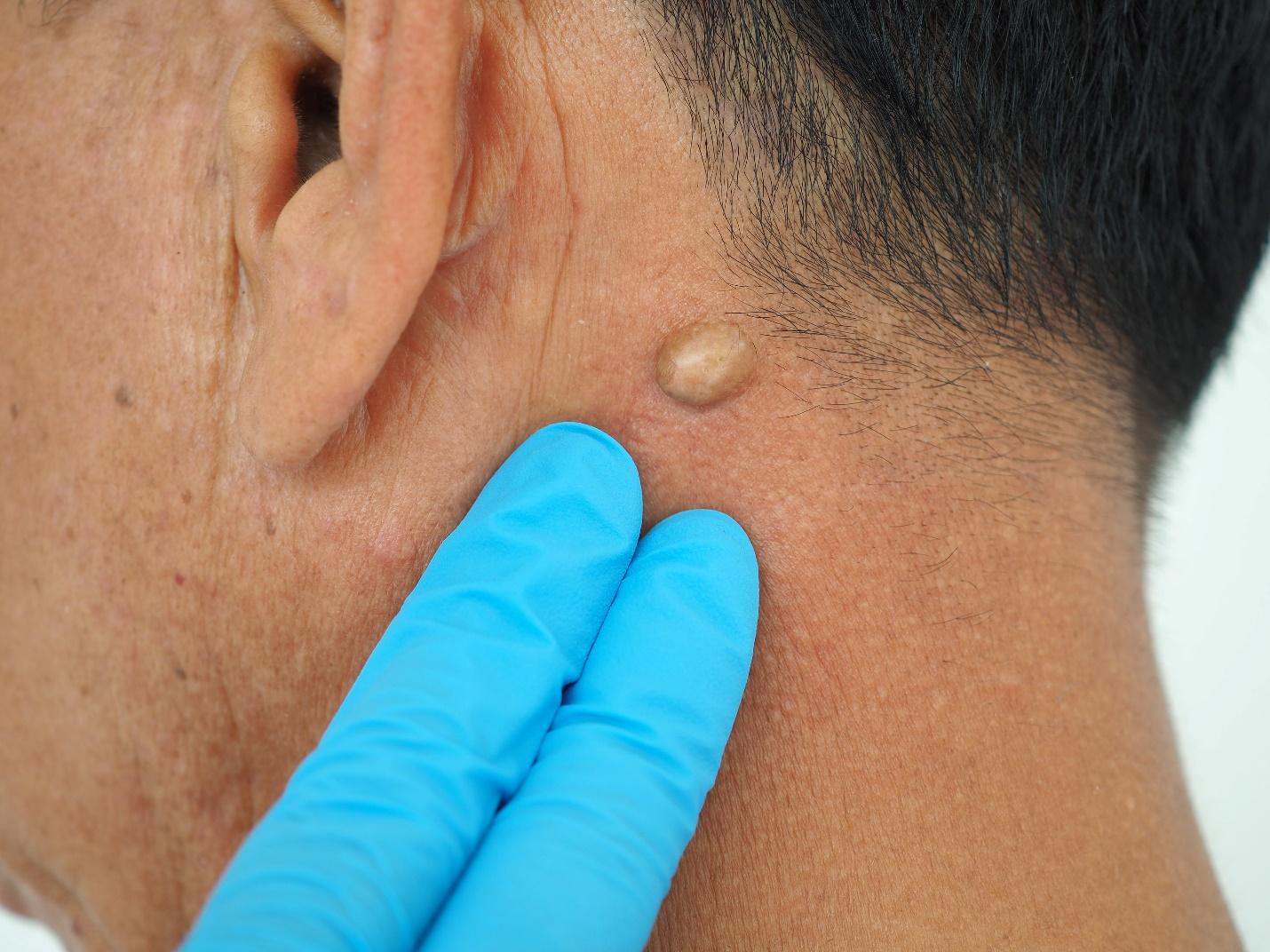
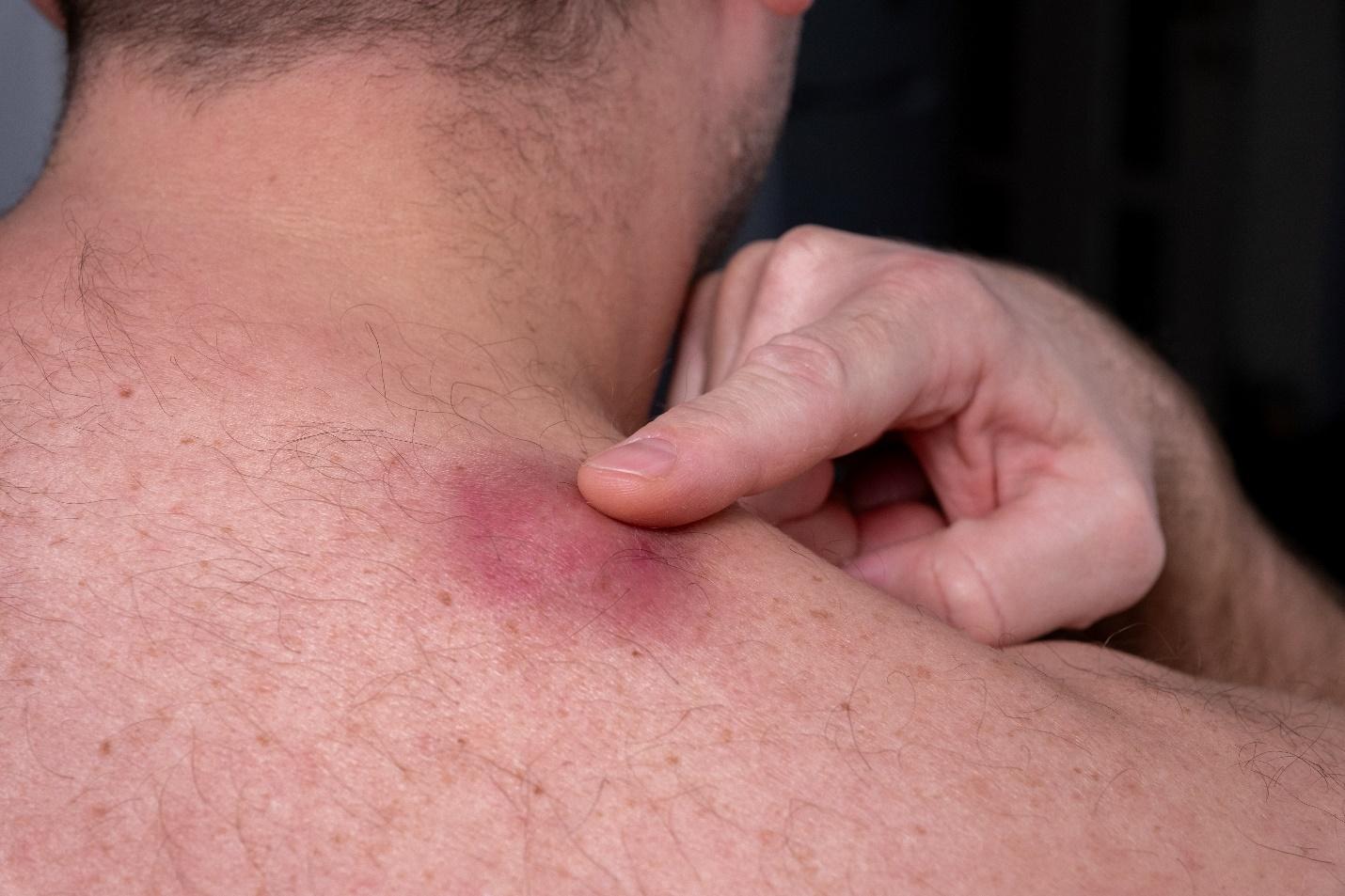
Sebaceous cysts typically appear as smooth, rounded lumps beneath the skin and may slowly enlarge over time.
These benign growths often enlarge gradually over months or years and may remain unchanged for long periods.
Some of the common features include:
- A well-defined lump beneath the skin surface
- A small central opening or punctum in some cases
- Skin that appears normal or slightly discoloured over the lump
- A lesion that moves slightly beneath the skin when touched
- Tenderness, warmth or redness if inflammation or infection develops
What is the difference between sebaceous cyst, acne and lipoma?
Many patients initially mistake a sebaceous cyst for a pimple, boil or fatty lump. Although these conditions can appear similar, they arise from different tissues and may require different treatment approaches.
FEATURE | SEBACEOUS CYST | ACNE CYST | LIPOMA |
Origin | Trapped skin cells or keratin | Inflamed oil gland and hair follicle | Fat tissue beneath the skin |
Texture | Firm or slightly movable | Tender and inflamed | Soft and doughy |
Growth pattern | Slow-growing | Often develops rapidly during flare-ups | Slowly enlarges over time |
Central opening | May have a visible punctum | Usually absent | Absent |
Pain | Usually painless unless infected | Often painful | Usually painless |
Treatment | Observation or removal | Acne treatment | Surgical removal (link to lipoma removal) if symptomatic |
Can a sebaceous cyst become cancerous?
The vast majority of sebaceous cysts are benign and remain non-cancerous throughout life. However, not every lump beneath the skin is a sebaceous cyst. Lipomas, enlarged lymph nodes, abscesses and, less commonly, skin or soft tissue cancers can sometimes appear similar.
A medical assessment is recommended to confirm the diagnosis, particularly if a lump:
- Continues to enlarge rapidly
- Frequently recurs after treatment
- Becomes persistently painful
- Develops ulceration or bleeding
- Has unusual features on examination
Sebaceous cysts typically appear as smooth, rounded lumps beneath the skin and may slowly enlarge over time.
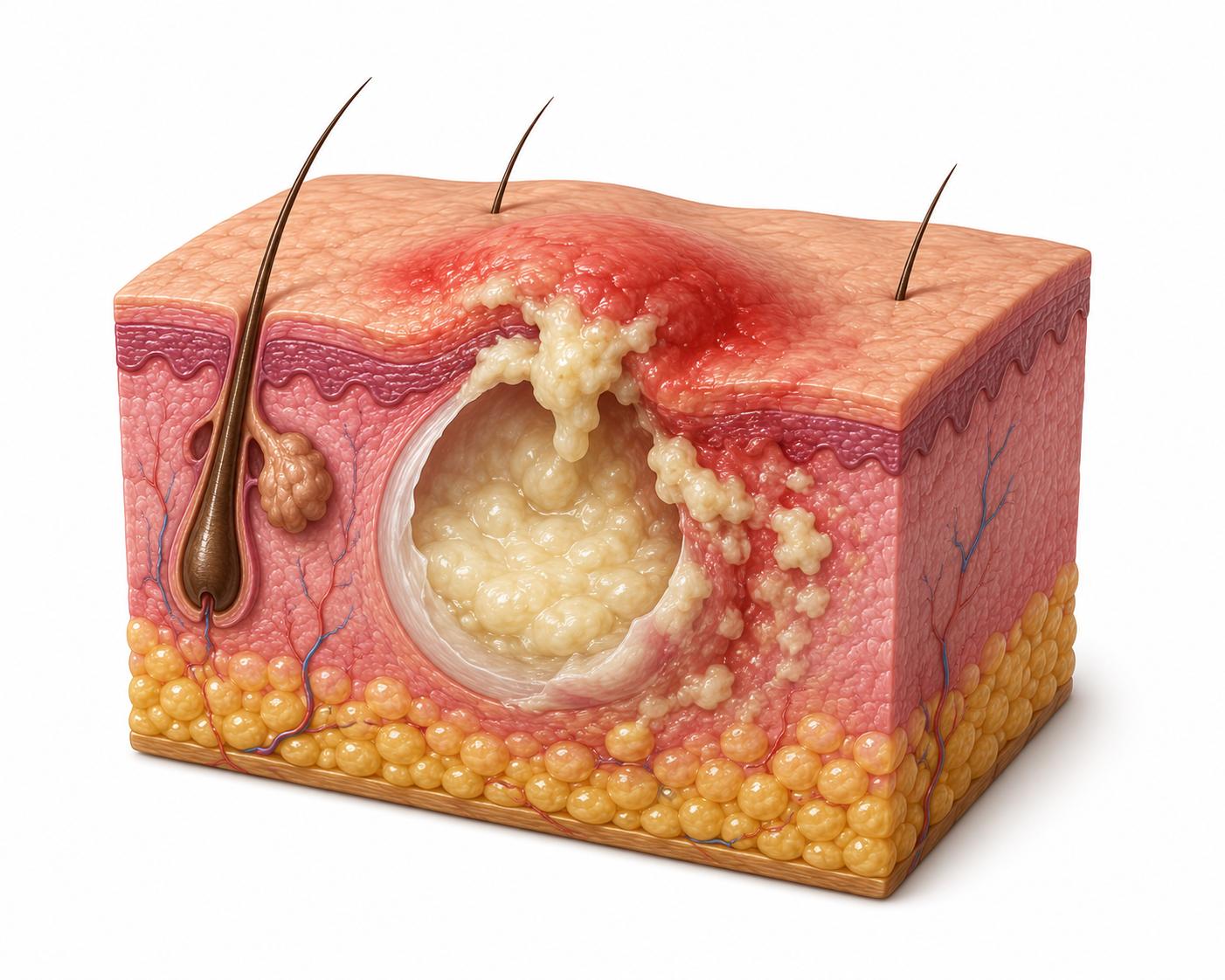
A sebaceous cyst may occasionally rupture, releasing keratin and cyst contents into the surrounding tissue. When this occurs, the body often reacts with significant inflammation.
Signs of a ruptured cyst may include:
- Redness around the lump
- Swelling
- Pain or tenderness
- Warmth of the surrounding skin
- Thick yellow or foul-smelling discharge
Medical review is recommended because a ruptured cyst may increase the risk of:
- Infection
- Persistent inflammation
- Scarring
- Formation of a chronic draining sinus tract
- Recurring cyst formation
Attempting to squeeze or pop a ruptured cyst yourself may worsen inflammation or increase the risk of infection.
How are sebaceous cysts diagnosed in Singapore?
Sebaceous cysts can generally be diagnosed during a specialist consultation without extensive testing. The primary goal is to confirm the diagnosis and distinguish the cyst from other skin or soft tissue lumps.
Assessment may include:
Clinical history review
The consultation begins with a discussion about:
- How long the lump has been present
- Whether it has changed in size
- Episodes of redness, infection or discharge
- Previous treatments or drainage procedures
- Associated discomfort or cosmetic concerns
Physical examination
The lump is carefully examined to assess:
- Size and location
- Consistency and mobility
- Presence of a punctum
- Signs of infection or inflammation
- Features that may suggest an alternative diagnosis
Ultrasound imaging
This is occasionally recommended when the diagnosis is uncertain, the lump is unusually large or deeper soft tissue involvement needs further evaluation
Treatment ranges from observation to complete surgical removal depending on symptoms and recurrence.
Many sebaceous cysts are harmless and may simply be monitored if they remain small and symptom-free. However, treatment may be considered when a cyst enlarges, becomes infected, causes discomfort, recurs repeatedly or creates cosmetic concerns.
Treatment options include:
Observation
Small, asymptomatic cysts may not require immediate treatment. Regular monitoring may be appropriate if the diagnosis is clear and the cyst remains stable.
Surgical excision
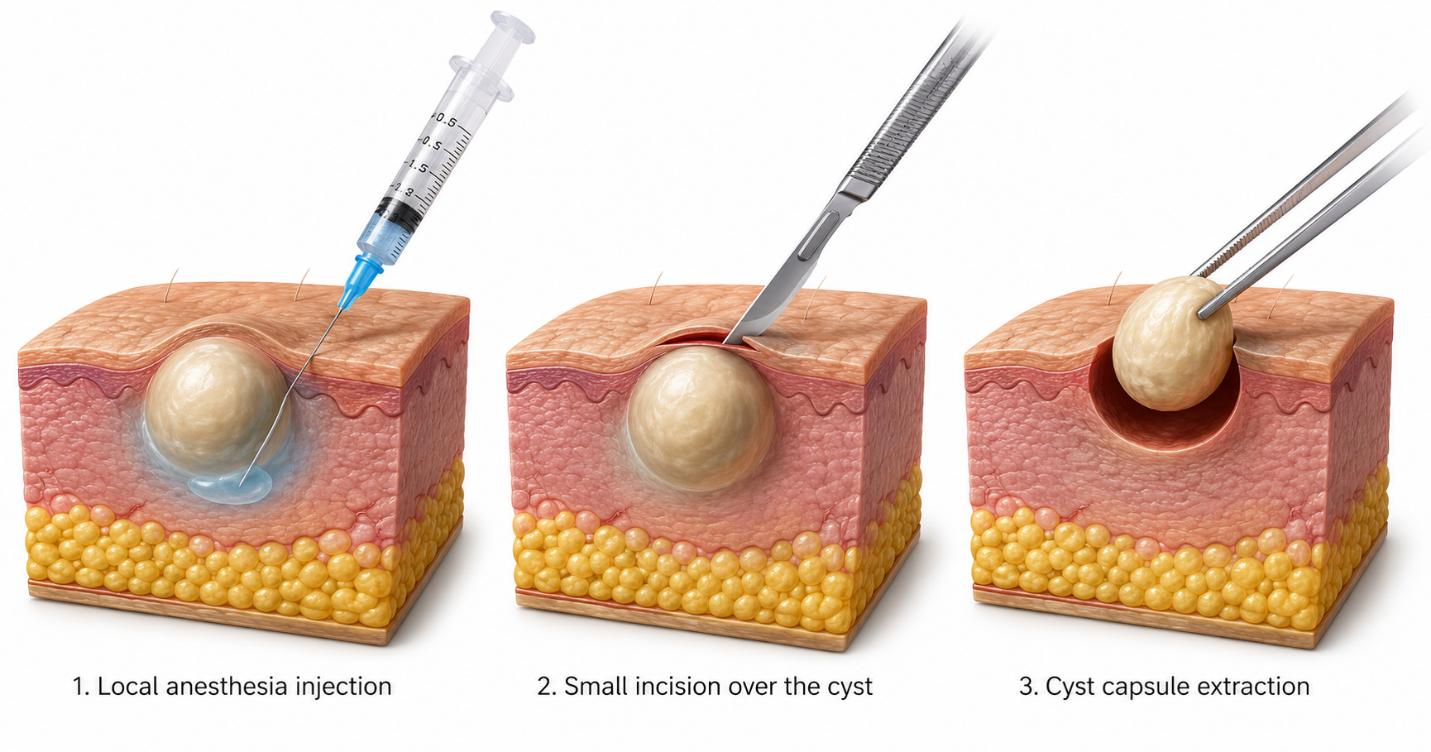
Complete removal of the cyst together with its capsule (cyst wall) is generally considered the most definitive treatment.
During the procedure:
- A small incision is made over the cyst
- The cyst and surrounding capsule are carefully removed
- The wound is closed with sutures
Removing the entire cyst wall helps minimise the likelihood of recurrence and provides tissue for pathological examination when indicated.
Incision and drainage
When a cyst becomes infected or develops into an abscess, immediate drainage may be required to relieve pain and reduce inflammation.
This procedure involves:
- Creating a small opening in the cyst
- Draining the accumulated contents
- Managing any associated infection
Because the cyst lining often remains behind, recurrence may still occur unless definitive excision is performed later.
Recovery after sebaceous cyst removal
Recovery milestone | Typical timeframe |
Return home | Usually discharged on the same day |
Normal daily activities | 1–3 days |
Wound healing | 1–2 weeks |
Scar maturation | Several months |
For patients travelling from the Philippines, sebaceous cyst removal is usually performed as a day procedure. Depending on the size and location of the cyst, many patients travelling from the Philippines are able to fly home within a few days, provided the wound is healing well and their surgeon considers it safe to travel.
Planning your visit from the Philippines
For patients travelling from the Philippines, evaluation can often begin before arrival through an online consultation.
During the teleconsultation, Dr Aaron Poh can review:
- The location of the lump
- Duration and growth pattern
- Previous infections or drainage procedures
- Medical history
- Photographs of the lesion when appropriate
To prepare for your consultation, it may be helpful to provide:
- Photographs of the lump
- Previous ultrasound reports (if available)
- Details of prior treatments
- Current medications
- Questions regarding removal and recovery
Our team can help coordinate consultations, investigations and treatment scheduling within your planned travel period.
Your care experience at Alpine Surgical Practice
Care focuses on confirming the diagnosis and determining whether cyst removal is appropriate.
For some patients from the Philippines, the main concern is not simply the presence of a lump but uncertainty about what it represents and whether treatment is necessary.
At Alpine Surgical Practice, Dr Aaron Poh carefully evaluates the lump, reviews any previous treatments and determines whether the lesion is consistent with a sebaceous cyst or another condition requiring further assessment.
Where appropriate, removal can be planned to address recurrent infection, discomfort, enlargement or cosmetic concerns.
If you have a persistent lump beneath the skin, arranging an appointment may help provide diagnostic clarity and guidance regarding the most appropriate treatment options.